Etihad Rail Set To Redefine Residential Living Across The Emirates
March 9, 2026
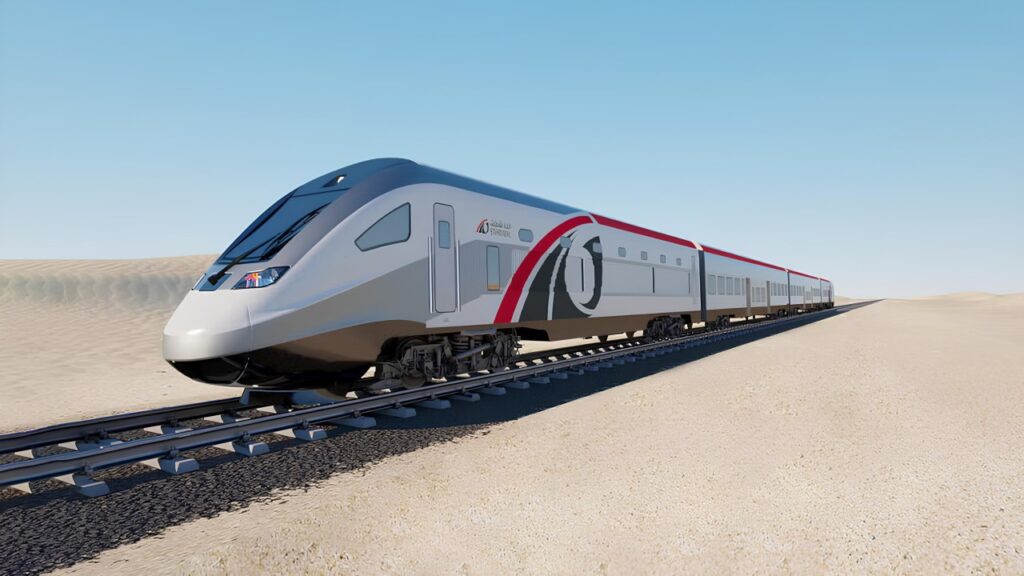
The launch of Etihad Rail’s passenger service is expected to have a meaningful impact on the UAE’s housing market. By connecting 11 key cities and regions with a reliable rail network, it may encourage residents to consider locations that were previously viewed as too distant for daily commuting. As a result, the traditional boundaries of the residential market could expand.
For many years, commuting time has been a major factor in residential choices across the UAE. Road congestion and unpredictable travel have made long-distance commuting difficult for daily routines. With the introduction of Etihad Rail, travel times are expected to become more reliable, potentially bringing locations such as Ajman, Ras Al Khaimah, Fujairah and Umm Al Quwain within a sub-90-minute commute. As a result, areas once considered too far for daily travel are now becoming more feasible for residents.
Industry experts indicate that this shift may lead to a wider redistribution of housing demand. Mid-income families, for instance, would typically prioritise larger living spaces, access to quality schools and affordability. Reliable rail connectivity would make these priorities more attainable. Employees with hybrid work arrangements may also consider locations that were previously impractical for daily commuting.
Currently, real estate activity along the rail corridor is centred on strategic land acquisition rather than immediate price increases near stations. A full repricing of nearby properties is more likely once station locations are finalised and last-mile connectivity is fully established. This pattern is consistent with trends seen in mature transport markets globally.
The impact of Etihad Rail is expected to extend beyond improved transport convenience. The network could support more integrated labour markets, widen employment catchment areas, and encourage the growth of new residential centres beyond Dubai and Abu Dhabi by strengthening connectivity between cities.
A key consideration for both homebuyers and tenants is whether the rail network will narrow the long-standing gaps in rents and property prices between Dubai and neighbouring emirates. While improved connectivity alone is unlikely to eliminate the premium linked to established business districts and lifestyle offerings, it does alter the decision-making process for price-sensitive residents who have previously avoided lengthy daily commutes.
Rental markets are expected to respond first, as tenants gravitate towards areas with improved rail access, supporting higher occupancy levels and stronger yields. Capital values are likely to adjust at a later stage, once commuting patterns are established and market confidence strengthens.
Overall, Etihad Rail has the potential to reshape the UAE’s commuter landscape and stimulate demand in locations that were previously considered peripheral. For both residents and investors, this highlights the growing importance of transport-led development as a driver of long-term property value.